
Featured Project
Affordable Travel: Designing Financially Accessible Experiences
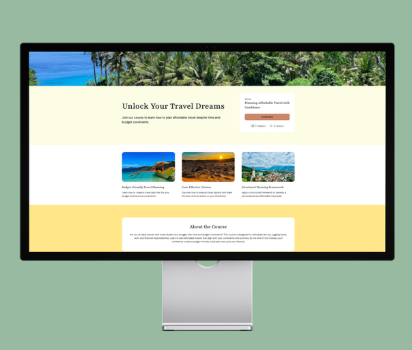
Designed and developed a scenario-based eLearning course in Thinkific to help adult learners build practical travel budgeting and decision-making skills. This project demonstrates my ability to align learning objectives, interactive experiences, and platform systems to create applied, competency-based learning.
Project Preview
-
Project Type: Scenario-based eLearning
Tools: Thinkific, Canva, Google Docs, Google Sheets, Google Forms, Typeform
Audience: Busy working adults
My Role: Instructional Designer (full lifecycle)
-
Many aspiring travelers believe global travel is financially inaccessible. This training was designed to help learners build the skills and confidence needed to plan meaningful, affordable travel experiences using real-world budgeting strategies.
The goal was to transform travel planning from an abstract aspiration into an actionable, achievable process.
-
By the end of the training, learners will be able to:
Create a realistic travel budget
Compare cost-saving strategies
Make financially informed travel decsions
Evaluate tradeoffs between cost, comfort, and experience
-
Analysis
Identified learner barriers and misconceptions
Defined practical, real-world learning outcomes
Conducted audience analysis
Design
Created scenario-based learning flow
Developed decision points and feedback loops
Designed competency-aligned objectives
Development
Built interactive module in Thinkific
Integrated branching scenarios
Created visuals and user interface
Evaluation
Tested usability and learner clarity
Refined based on feedback
-
Scenario-Based Learning
Learners make realistic travel planning decisions.
Interactive Decision Points
Immediate feedback strengthens earning transfer.
Authentic Context
Real-world pricing, constraints, and tradeoffs.
Competency-Based Design
Focus on applied skills, not passive content consumption.
-
Instructional design lifecycle (ADDIE)
Storyboarding
eLearning development
Scenario-based learning design
Learner-centered design
Competency-based learning design
Educational technology integration
Visual design for learning
-
This project strengthened my ability to design applied, scenario-based learning experiences that support the development of real-world skills. Through this process, I developed systems to align learning objectives, learner actions, and feedback, ensuring meaningful learning transfer. This approach reflects my broader work designing competency-based learning systems that make growth visible and actionable.
-